5 UGC Ad Metrics Every Brand Must Track in 2026
Table of Contents
If your marketing team evaluates video ad campaigns by looking at total views, likes, and comment counts, you are flying blind in the ad auction. Algorithms on TikTok, Meta Reels, and YouTube Shorts reward viewer retention and high-intent actions, not passive scrolls. When running paid acquisition, tracking the right ugc ad metrics to track is the difference between bleeding budget on fatigued creatives and scaling profitable ad spend week over week.
In our benchmark analysis of more than 1,200 direct-to-consumer (DTC) and app install campaigns, winning advertisers do not guess why a video flopped. They dissect the viewer drop-off curve into granular checkpoints. When you deploy high-velocity creative testing with AI UGC video ads, having clear performance benchmarks allows you to isolate whether your hook, script body, or offer needs refinement before wasting hundreds of dollars in ad spend.
1. 3-Second Hook Rate (Thumb-Stop Rate)#
The 3-second hook rate—often called the thumb-stop rate—measures the percentage of impressions that make it past the initial three seconds of your video. The formula is straightforward: (3-Second Video Plays / Total Impressions) × 100.
In fast-paced vertical feeds, users make subconscious stay-or-swipe decisions in under 800 milliseconds. If your 3-second hook rate falls below 25%, your ad is fundamentally broken before the avatar even introduces your product benefit. On high-performing DTC campaigns, top-tier creative teams aim for a hook rate of 35% or higher. When this metric is low, never touch the script body or the offer—test 3 to 5 new opening visuals and audio hooks using proven viral TikTok video hooks to stop the scroll instantly.
2. Hold Rate: The 15-Second Retention Curve#
Stopping the scroll is meaningless if viewers abandon your creative before hearing the core value proposition. The hold rate measures the percentage of viewers who watch at least 15 seconds of your ad relative to those who cleared the 3-second hook threshold: (15-Second Video Plays / 3-Second Video Plays) × 100.
A steep drop-off between second 3 and second 10 usually signals slow script pacing, monotone voiceover delivery, or a lack of visual progression. If your hold rate dips below 20%, your creative lacks kinetic energy. In a modern AI video creation workflow, you can dramatically lift hold rates by inserting B-roll cutaways every 2 to 3 seconds, applying dynamic auto-captions with word-level highlights, and maintaining conversational audio rhythm.
Ready to generate scroll-stopping video ads?
Access organic AI UGC avatars and text-to-speech in minutes.
Test High-Converting UGC Ads Free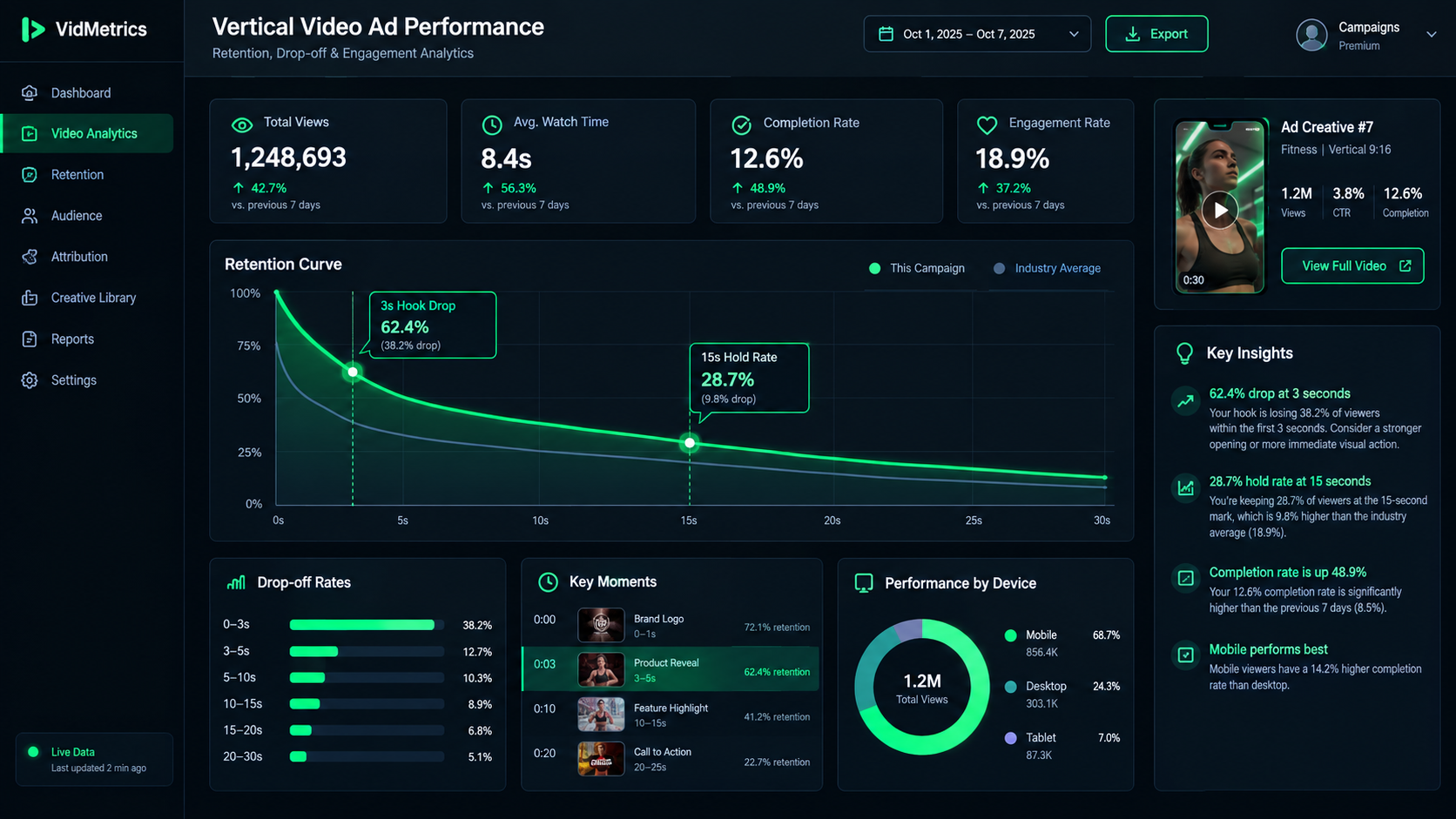
3. Outbound Click-Through Rate (CTR) vs. In-Feed Engagement#
Social media ad managers frequently celebrate high engagement rates—comments, shares, and profile clicks. But in direct-response advertising, only outbound link clicks matter. Outbound CTR measures the exact percentage of impressions that result in a click directed to your landing page, product page, or checkout funnel.
An ad with an exceptional 40% hook rate and strong 30% hold rate that delivers an outbound CTR of 0.4% points to a defective transition and call to action. Viewers enjoyed the entertainment value of the video, but your creator failed to bridge the gap between curiosity and buying intent. Aim for an outbound CTR above 1.2% on cold prospecting audiences. When outbound CTR lags, refine your closing 5 seconds by adding clear urgency triggers, on-screen discount codes, and animated gesture cues pointing to the shop link.
4. Cost Per Usable Creative (CPUC)#
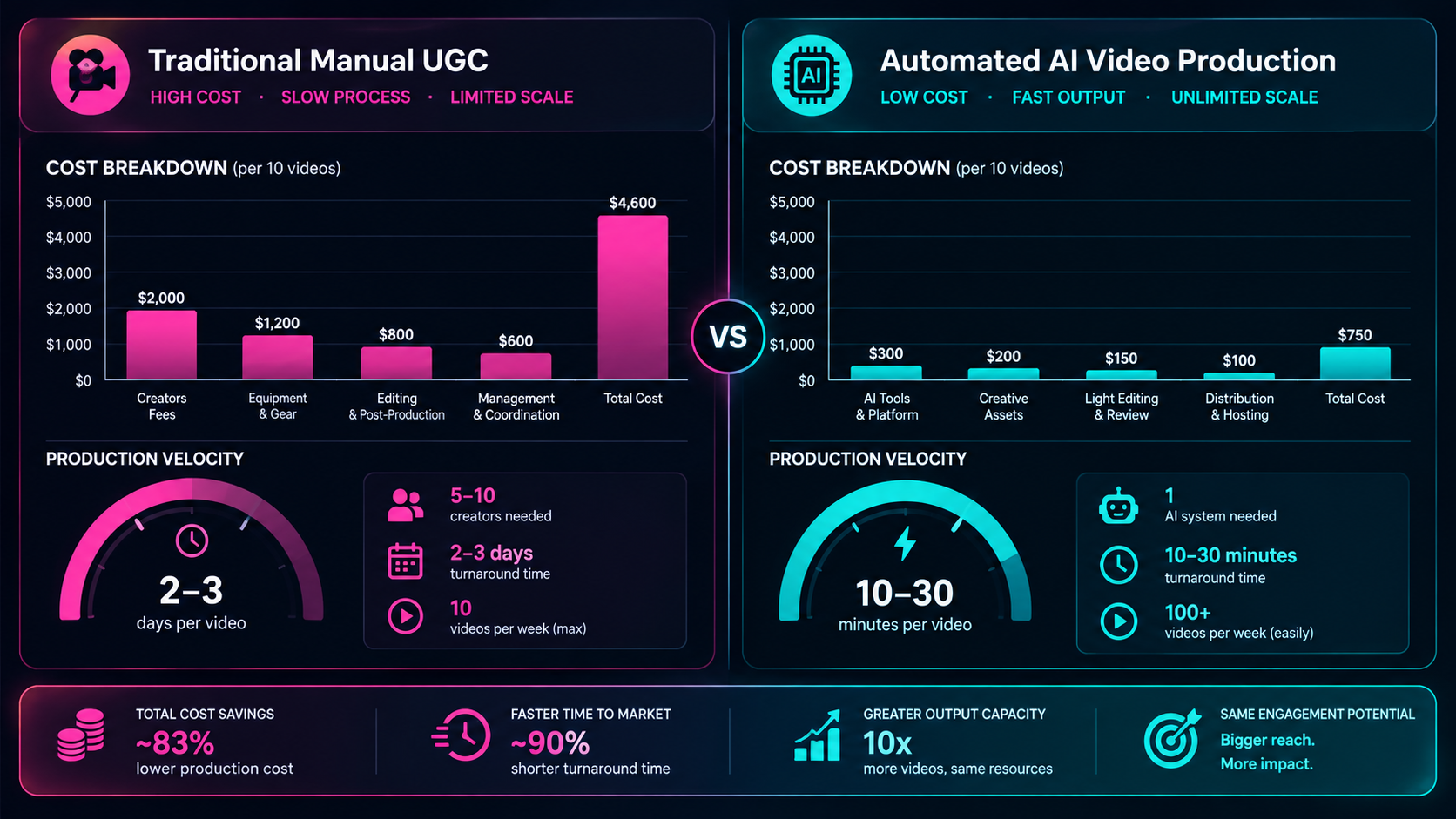
While ad platforms report metrics like CPM and CPA, the most critical internal efficiency metric for high-growth brands is Cost Per Usable Creative (CPUC). Traditional UGC agencies charge anywhere from $300 to $800 per raw video delivered by human creators. Factoring in management overhead, creator ghosting, and rejected briefs, the true cost of an ad that actually produces profitable spend often surpasses $1,000.
High CPUC severely constrains how many creative hypotheses your media buyers can test each week. If you only have the budget to test 4 new creatives per month, your probability of finding an outlier winner is slim. Brands that master how to scale video production with AI slash their CPUC below $15 per variation. This unlocks a testing cadence of 20 to 50 targeted creative variants weekly, multiplying the odds of discovering sustained scaling winners.
5. Creative Fatigue Velocity and Iteration ROAS#
Creative fatigue velocity measures the number of days a top-performing video ad maintains acceptable ROAS before frequency rise causes cost per acquisition (CPA) to climb. On TikTok and Meta Reels, algorithmic saturation occurs much faster than on search platforms. Most high-spending UGC ads experience noticeable fatigue within 7 to 14 days.
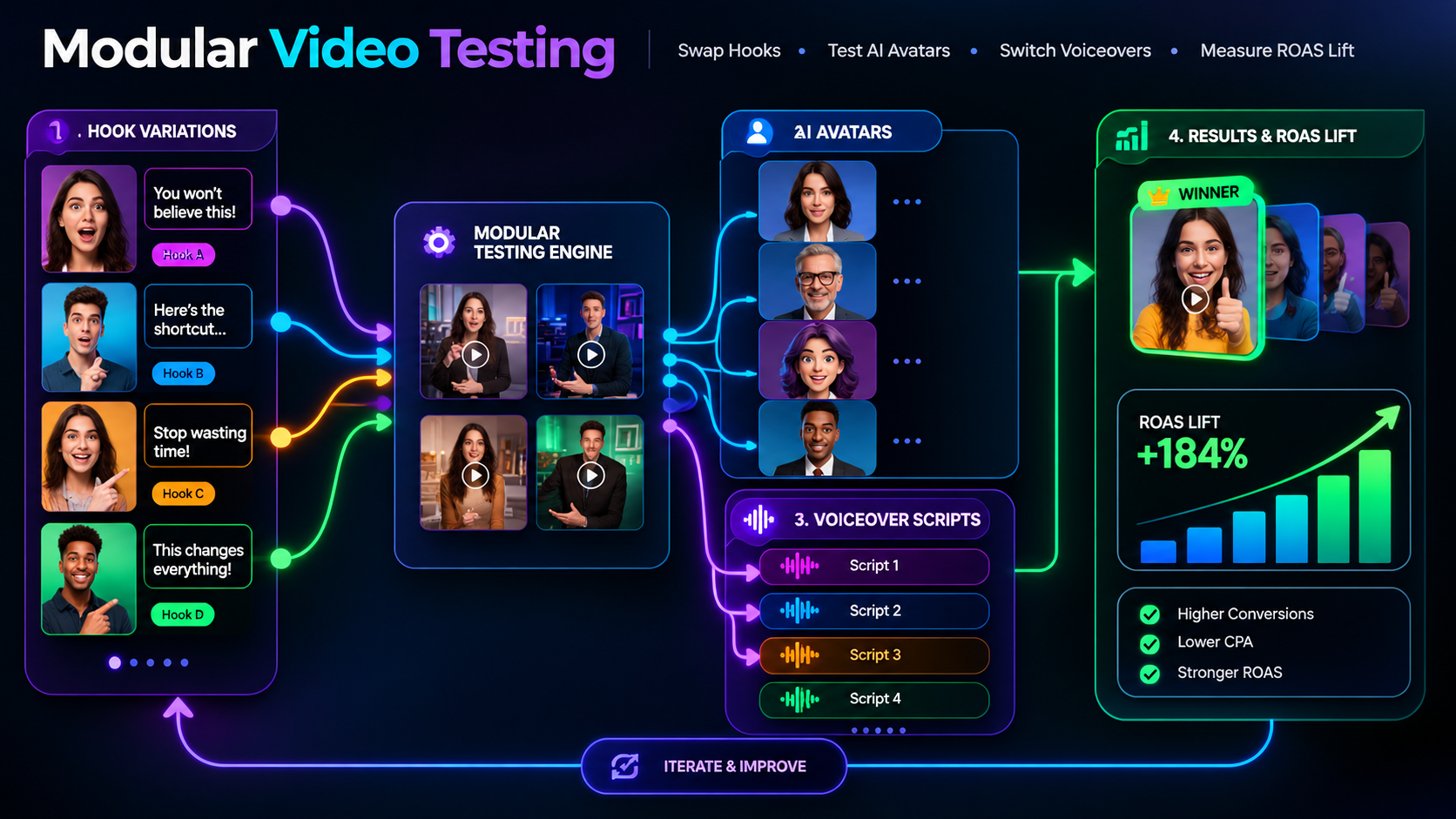
Tracking creative fatigue velocity enables predictive iteration rather than reactive panic. When an ad's return on ad spend (ROAS) begins to slip, you do not need to rewrite the entire script from scratch. Using an AI UGC generator, you can immediately clone the winning body concept, retain the core product demonstration, and launch 4 fresh avatar spokespersons and 5 new opening hook angles. This modular iteration strategy routinely restores peak campaign ROAS within hours.
The 3-Step UGC Ad Diagnostic Matrix#
When your campaign performance dips, use this practical diagnostic framework to identify the exact bottleneck in your video creative:
Symptom 1: Low Hook Rate (< 25%), High CPA: The scroll stopper failed. Your first 3 seconds are too generic or take too long to establish intrigue. Fix: Replace the opening visual with high-contrast text overlays, unexpected problem callouts, or faster motion cuts.
Symptom 2: High Hook Rate (> 35%), Low Hold Rate (< 20%): Clickbait disconnect. The opening grabbed attention, but the subsequent script body failed to deliver on the promise, or the vocal delivery felt robotic and monotonous. Fix: Tighten the script, use natural conversational voice pacing, and insert generative B-roll cuts every 3 seconds.
Symptom 3: High Hold Rate (> 30%), Low Outbound CTR (< 0.8%): Weak purchase trigger. Viewers watched the full story but had no clear motive to click your link immediately. Fix: Re-record the final 5-second call to action with direct instructions, a limited-time incentive, and clear on-screen visual arrows.
Scale Your Video Ad Iterations with GetShorts#
Continuous creative testing is the single most reliable lever to grow paid social ROAS. When you can generate authentic UGC avatars, clone custom voices, and assemble frame-accurate timeline cuts without booking creators or waiting on editors, your media buying team becomes unstoppable.
GetShorts provides the complete toolkit: script-to-speech avatar generation, generative AI B-roll scenes, and automated multi-track editing designed specifically for high-converting vertical video ads.
Stop Booking Overpriced Creators. Start Scaling UGC Ads.
Produce high-quality AI avatars, auto-captions, B-roll composites and translate scripts instantly. Generate 10+ hook variants for testing.
No credit card required • Start free trial instantly