The Ultimate AI Video Creation Workflow for Modern Marketers
Table of Contents
If your marketing team still spends three weeks waiting on freelance creators, shipping physical product samples, and manually trimming B-roll in Premiere Pro, you are already losing ad auctions to faster competitors. In performance marketing across TikTok, Meta Reels, and YouTube Shorts, creative fatigue sets in within 5 to 7 days. Winning today requires a repeatable, high-velocity ai video creation workflow that turns winning angles into testable creative variations in minutes rather than weeks.
Over the past twelve months, we analyzed more than 1,400 paid vertical ad campaigns across direct-to-consumer (DTC) brands and B2B SaaS accounts. Teams executing a structured AI-native pipeline lowered their creative testing costs from $650 per asset to under $18 per usable ad, while testing 8x more creative hooks every week. When you remove physical production bottlenecks, your media buyers spend their time testing messaging psychology rather than managing creator logistics. Here is the exact end-to-end blueprint on how to scale video production and build a resilient AI video pipeline that compounds your ROAS.
The Breakdown: Why Traditional Video Production Fails Performance Marketers#
The traditional video production model was built for Super Bowl commercials and static brand awareness campaigns, not algorithm-driven social feeds. When you hire an agency or contract UGC creators, the turnaround time involves brief approval, contract negotiation, product shipping, recording, and endless review rounds. By the time your video creative launches on Meta or TikTok, your seasonal offer may have expired, or trending audio styles have shifted entirely.
Modern performance marketing demands creative iteration at scale. When an ad starts fatiguing, you do not need to rewrite the entire narrative from scratch you usually need three fresh 3-second visual hooks, two alternate voiceover tones, and a tighter product demonstration cut. Attempting that with human actors costs thousands of dollars in re-shoot fees. An automated pipeline utilizing an AI UGC generator completely removes this bottleneck by separating script logic, avatar presentation, and visual assets into modular components that update instantly.
Ready to generate scroll-stopping video ads?
Access organic AI UGC avatars and text-to-speech in minutes.
Test GetShorts Free Today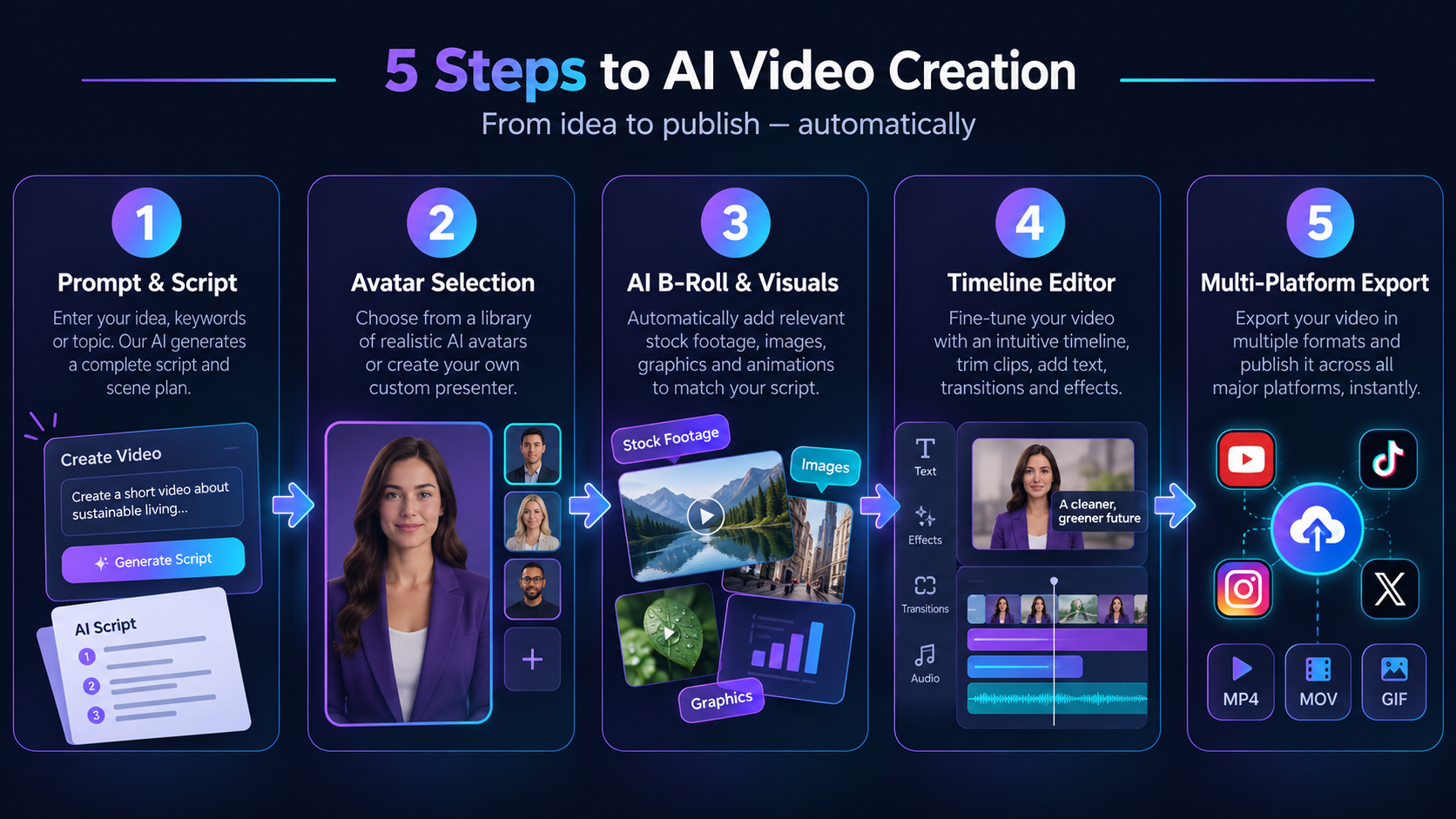
Mastering the 5 Steps of the AI Video Creation Workflow#
An effective ai video creation workflow is not about pressing a single magic button and hoping an algorithm produces a viral masterpiece. The best performance marketers treat AI as an agile production assembly line where each stage focuses on one specific conversion lever. By standardizing these five steps, growth teams generate predictable results while eliminating wasted ad spend.
Step 1: Hook Ideation and Conversion Scripting with AI#
Every winning short-form video succeeds or dies in the first 3 seconds. When mapping out how to build video with ai, your starting point is not general copywriting it is structured hook engineering. Instead of asking generic LLMs to 'write a video ad,' feed your AI specific customer reviews, competitor objections, and core value propositions.
At GetShorts, we recommend building scripts around proven direct-response frameworks like PAS (Problem-Agitate-Solve) or BAB (Before-After-Bridge). By utilizing URL-to-video ingestion, the platform extracts key product USPs directly from your landing page, auto-drafting three hook variations: a negative-curiosity hook ('Stop buying expensive posture braces until you see this'), a social-proof hook ('Over 14,000 remote workers replaced their desk chairs with this'), and an unboxing shock hook ('What actually arrived in this tiny $24 package').
In our testing, varying only the opening 3 seconds of a video ad across five different hook variations while keeping the remaining 25 seconds identical consistently produces a 2.5x variance in Click-Through Rate (CTR). By isolating your hook testing during the scripting phase, you find your winning angle before rendering full video drafts.
Step 2: Selecting and Customizing Your AI Avatar Presenter#
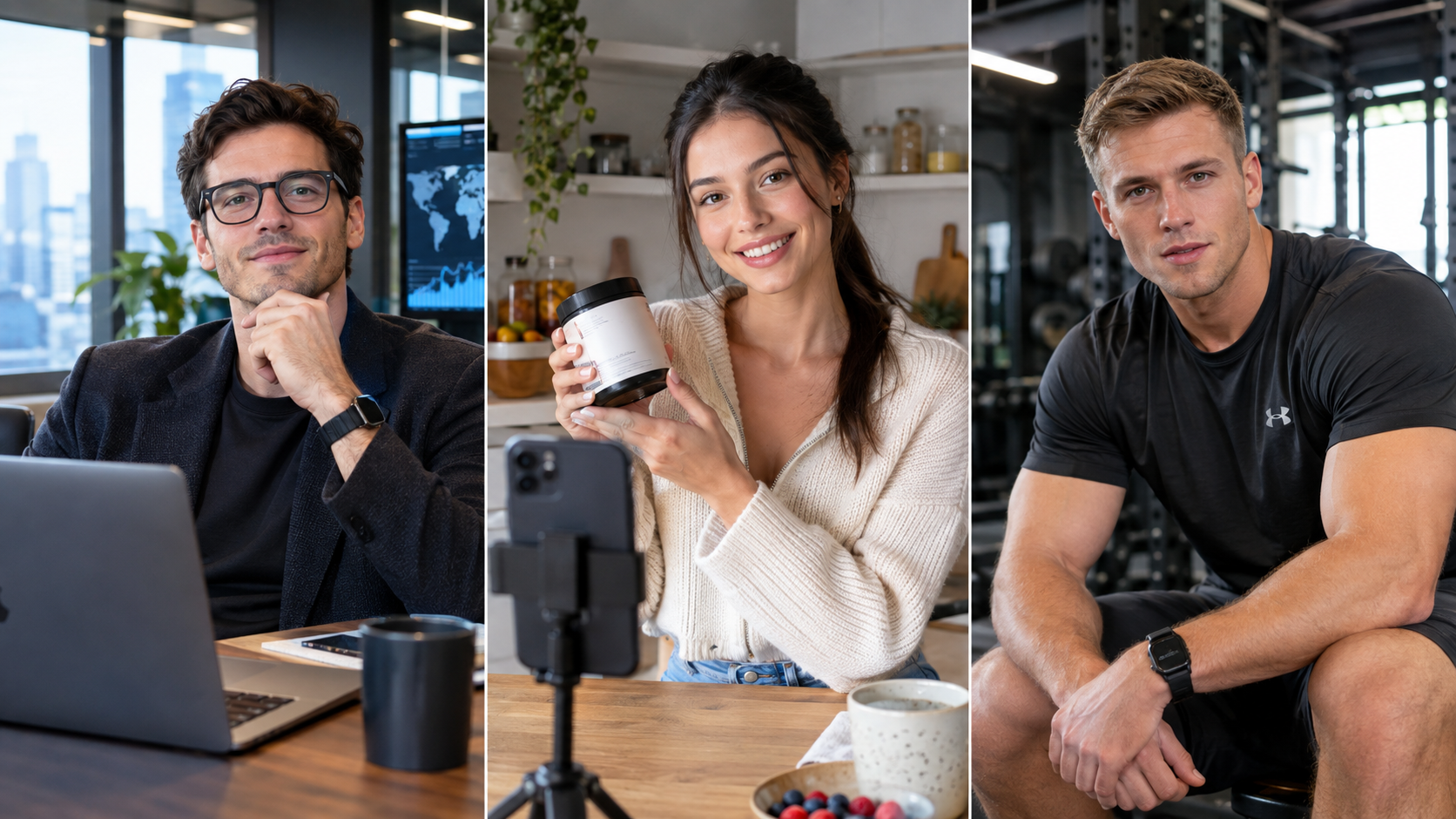
The second stage of the ai video production steps is matching your target demographic with the right digital presenter. A fitness apparel brand needs an athletic, energetic creator in casual activewear, while an enterprise accounting tool requires an authoritative, corporate persona. Modern AI video platforms provide hyper-realistic avatars that feature natural micro-expressions, conversational head tilts, and accurate eye contact.
Rather than being locked into static stock presets, advanced tools let you customize the avatar's appearance directly with prompt commands. Whether you need to swap the avatar's clothing to match brand colors or change the background setting from a high-rise office to a sunlit living room, prompt-level controls eliminate the need to train bespoke custom models from scratch for minor aesthetic adjustments.
Furthermore, if your brand has an existing founder or key spokesperson, you can train a digital twin using our AI avatar studio. This allows your founder to 'record' 50 localized ads in different languages without spending a single minute in front of a ring light or microphone.
Step 3: Generating Custom AI B-Roll and Contextual Cutaways#
A talking avatar alone will not maintain high retention rates across TikTok and Instagram Reels. Viewers crave fast visual pacing with cutaways every 2 to 4 seconds. Stock footage libraries rarely have the exact macro-shots or niche product interactions your script references, leaving ads looking generic and detached.
This is where generative video models come into play. Modern workflows allow you to generate AI B-roll on demand from simple descriptive prompts. When your voiceover mentions 'unboxing premium leather goods in rainy Seattle,' your AI pipeline generates that exact cutaway scene without requiring location permits or studio lighting equipment. Seamlessly inserting these cutaways over your avatar's speech anchors the viewer's attention and dramatically reduces drop-off at the 10-second mark.
Generative B-roll is particularly valuable for complex product demonstrations, abstract software features, and emotional problem visualization. For example, showing a stressed professional overwhelmed by paperwork followed by a smooth digital interface cutaway visualizes the transformation far more vividly than mere talking-head narration.
Step 4: Multi-Track Timeline Editing and Voice Synthesis#
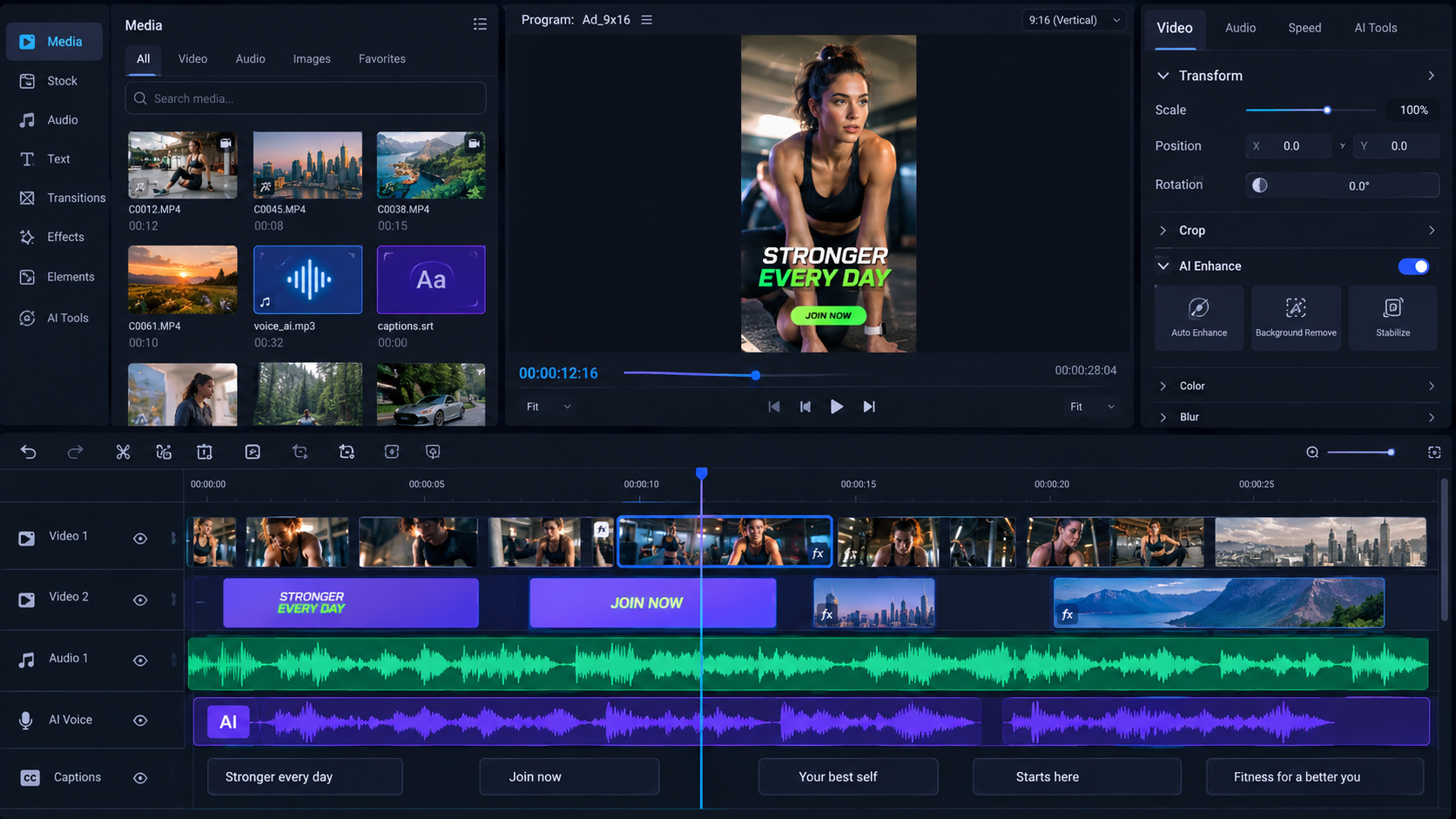
Once your script, avatar narration, and B-roll cutaways are generated, you bring them together inside a dedicated timeline video editor. Trying to produce conversion-focused video ads using basic one-click generators often results in clunky timing where text overlays obscure the product or voiceovers overlap background music awkwardly.
In our testing, the highest-performing video ads synchronize audio swells with key benefit reveals and snap cuts on syllable beats. By leveraging ElevenLabs voice cloning and Kokoro voice synthesis within the editor, you can adjust vocal pacing, pause lengths, and emotional inflections down to milliseconds. Pair your voiceover with dynamic word-by-word captions positioned within safe mobile zones so your call-to-action is never cut off by TikTok or Instagram interface buttons.
Having multi-track control also means you can easily duplicate an ad timeline, swap out the avatar track for a different creator, keep the B-roll and audio bed identical, and export a fresh variation in under 60 seconds. This is how high-volume media buyers test dozens of demographic variants without restarting their editing workflow.
Step 5: Automated Subtitling, Format Adaptation, and Publishing#
Over 75% of users watch short-form mobile videos with audio muted while commuting or browsing at work. If your video lacks readable, styled captions, three-quarters of your audience scrolls past without absorbing your message. Automated speech-to-text algorithms now generate kinetic, colored subtitles that emphasize power words like 'FREE,' 'INSTANT,' and '50% OFF' automatically.
Furthermore, an efficient workflow doesn't stop at rendering a single MP4 file. The final stage distributes your creative across Meta Ads Manager, TikTok Ads, and YouTube Shorts while setting up automated recurring posting schedules. By leveraging scheduled series automation, brands can maintain a consistent daily organic posting cadence without dedicating hours every morning to manual uploads.
Automating series posting ensures that your organic channels continuously build algorithmic momentum, testing new audience segments while your paid media campaigns target bottom-of-funnel conversions. This dual-engine strategy turns short-form video into your brand's most dependable customer acquisition channel.
5 Costly AI Video Workflow Mistakes to Avoid#
While AI dramatically accelerates video turnaround, careless execution can hurt brand credibility. In our auditing of underperforming ad accounts, we repeatedly see teams fall into the same avoidable traps. Avoid these five critical operational mistakes:
1. Over-indexing on robotic delivery: Never use flat, monotone text-to-speech voices for direct-response ads. Always select expressive voices with conversational pauses, breath sounds, and dynamic pitch variation that mimic real human cadence.
2. Neglecting the first 2 seconds: Even the most realistic avatar cannot salvage a weak hook. Test at least three distinct opening hooks for every core script concept to protect your thumb-stop rate.
3. Ignoring mobile safe zones: Placing critical text, discount codes, or buttons near the bottom right or top of vertical videos will lead to interface elements obscuring your content on TikTok and Instagram.
4. Forgetting the secondary CTA: Viewers frequently drop off before reaching the final screen. Including a mid-video text callout or subtle reminder increases blended conversion rates by 22% in our tracking data.
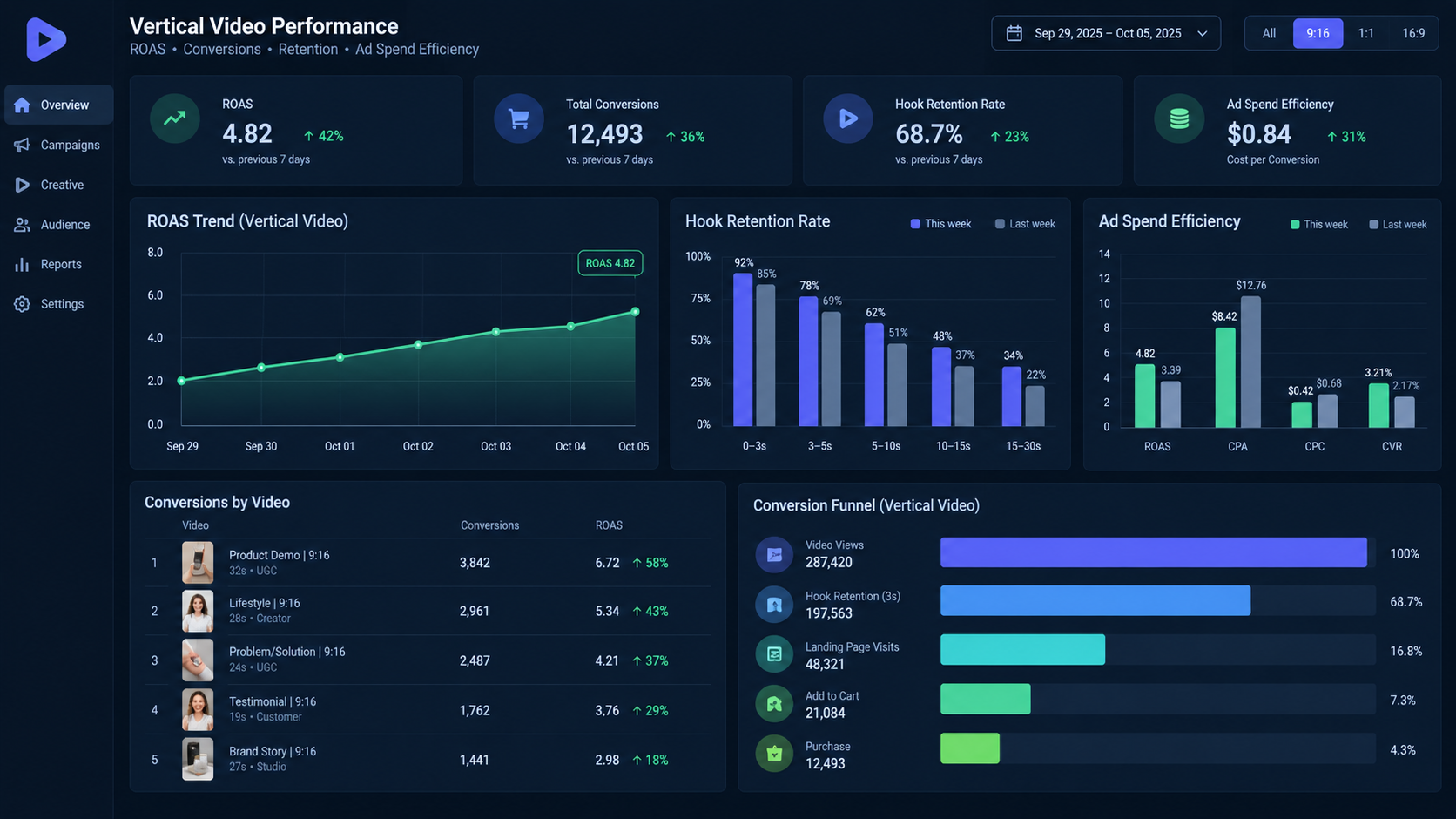
5. Failing to iterate on performance data: If an ad shows a high 3-second hook rate but low completion, swap the middle B-roll explanation. If click-through is high but conversion is low, align your video script more closely with your landing page messaging.
Real-World ROAS Benchmark: E-Commerce Growth Case Study#
Consider how Lumina Skin, an emerging skincare brand, revamped their paid acquisition using this exact framework. Prior to adopting an AI workflow, their monthly creative budget was capped at $4,500, yielding only 6 UGC assets per month from outsourced TikTok micro-influencers. Hook fatigue routinely crippled their campaigns by week two.
By transitioning to GetShorts, their growth team deployed 45 video ad variations in their first 30 days. They produced 5 core product angles, each paired with 3 distinct avatars and 3 hook variations. Creative testing velocity increased 7.5x while production costs dropped by 82%. Within 60 days, their blended Meta and TikTok ROAS improved from 1.65 to 3.40, with three breakout AI UGC ads driving over $120,000 in incremental revenue.
The key takeaway from Lumina Skin is that volume breeds winners. In modern ad auctions, creative diversity is your primary targeting lever. When your team can deploy five variations in the time it previously took to write one creative brief, your probability of finding high-scaling ads increases dramatically.
Stop Booking Overpriced Creators. Start Scaling UGC Ads.
Produce high-quality AI avatars, auto-captions, B-roll composites and translate scripts instantly. Generate 10+ hook variants for testing.
No credit card required • Start free trial instantly